
Lectures & Classes
Presentations and Workshops
Mark is an entertaining and experienced speaker who loves engaging with audiences large and small about native plants, weeds, gardening, and photography. Each of his programs incorporates his award-winning photography and extensive knowledge about plants, plus occasional bits of nerdy plant humor. While he strongly prefers being in the same room with his audience, he can also present his programs via Zoom or other online platforms. He has been on the podium at the Northwest Flower & Garden Festival several times, has spoken to numerous native plant and gardening groups across the Pacific Northwest, and has taught photo workshops at Whatcom Community College, North Cascades Institute, and Siskiyou Field Institute.
Program List
Wildflower Programs
- Wildflowers of the Pacific Northwest National Parks
- Rare and Endemic Plants of the Northwest
- Wildflowers of the Siskiyous and Surrounding Area
- Wildflowers of the North Cascades
- Not Weeds — Northwest Roadside Wildflowers
- Wildflowers to See Within a Day's Drive of Portland
- Central Oregon Wildflowers
- Pasayten Wilderness Wildflowers
- Goat Rocks Wilderness Wildflowers
Weeds Programs
Gardening with Native Plants Programs
- Incorporating Native Plants in Your Garden
- Native Plants for Beauty and Structure in Your Garden
- Native Plants for Biodiversity
- Rock Gardens of the Pacific Northwest
- 37 Native Gems for Northwest Gardens
- In From the Wild: Native Trees & Shrubs for Northwest Gardens
Photography Programs
Wildflower Programs
Wildflowers of the Pacific Northwest National Parks
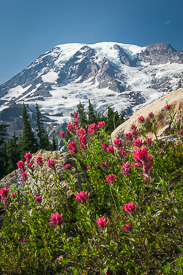
Olympic, Mount Rainier, North Cascades, and Crater Lake National Parks are popular destinations for many visitors. Each supports a diverse array of wildflowers spanning many different habitats. The flowers found in the parks are representative of those that grow in similar habitats in other parts of the northwest.
In this program, Mark Turner will share 101 of his favorite flowers from the parks. Some of the flowers are common and frequently seen and others are unusual, rare, or endemic to very localized habitats.
Rare and Endemic Plants of the Northwest
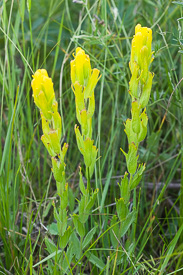
Several areas in the Pacific Northwest, including the Olympic Mountains, Steens Mountain, the Klamath/Siskiyou Mountains, and the Columbia Plateau are home to plants found nowhere else. Other plants are rare and not often seen.
In this program, organized geographically, you'll get to see a selection of about 100 of these rare beauties, including Epilobium siskiyouense (Siskiyou willowherb) and other plants that didn't make it into Wildflowers of the Pacific Northwest because there wasn't room. Other rare flowers in this show did make the book, including Castilleja levisecta (golden paintbrush), Cephalanthera austiniae (phantom orchid), Darlingtonia californica (California pitcher plant), and Lilium bolanderi (Bolander's lily).
A shortened version of this program with about 50 slides that fits a 25-minute time slot is also available.
Wildflowers of the Siskiyous and Surrounding Area
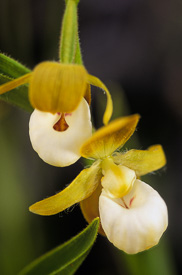
The Klamath/Siskiyou range spanning the Oregon - California border has a high number of rare and endemic plants as a result of the extensive serpentine rock and resulting soils, as well as habitat and elevation diversity. Wetland plants like Darlingtonia californica (California pitcher plant) and Cypripedium californicum (California lady's-slipper) are found here. On drier sites you might find Epilobium siskiyouense (Siskiyou willowherb), Fritillaria gentneri (Gentner's fritillary), or Silene hookeri (Hooker's Indian-pink). There are also many more common species found within the Siskiyous. In this program you'll see 105 plants, including both rare and common species.
Wildflowers of the North Cascades
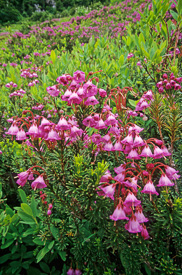
The North Cascades, a wild and rugged region in northern Washington, is home to hundreds of species of wildflowers. Some live in the moist forests on the western slopes while others survive tough conditions and a very short growing season high in the alpine zone. Still others live on the drier eastern slopes of the mountains.
In this program you'll enjoy photographs of about 100 of the showiest and most interesting plants found in the North Cascades, both in and outside the North Cascades National Park.
Not Weeds — Northwest Roadside Wildflowers
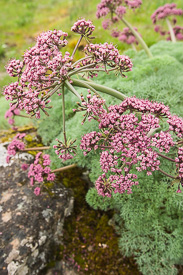
Northwest roadsides can spring to life with showy wildflowers during the spring and summer. While we have a number of invasive weeds, many of our native species also put on quite a show, including a few that are rare or endemic like the uniquely-colored Lomatium columbianum (Columbia desert parsley) found along Hwy 14 in the Columbia Gorge. Some flowers are prominent enough to recognize at 65 mph on the freeway; others will be found only when meandering slowly along a Forest Service byway.
In this 30-45 minute program you'll be introduced to about 60 plants that are easily recognized from behind your windshield.
Wildflowers to See Within a Day's Drive of Portland
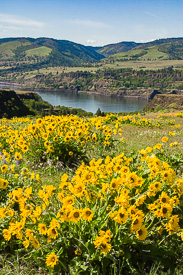
Portland, Oregon is conveniently situated for many day trips to spectacular locations to view Northwest wildflowers. From Mount Saint Helens and Mt. Adams on the north, Mt. Pisgah Arboretum near Eugene on the south, the Oregon coast on the west, and the Columbia Gorge on the east you could spend almost every day seeking and enjoying the flowers without running out of places to go.
In this program you'll be introduced to some of the flowers you can expect to find in these conveniently-located areas. You'll see both common species and a few rare and endemic plants that can be found nowhere else.
Central Oregon Wildflowers
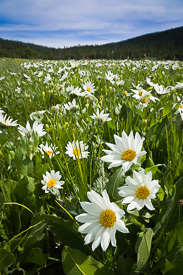
Central Oregon’s high desert country has diverse habitats including wet meadows, sage-steppe, ponderosa pine forests, and high elevation meadows and peaks. As a result, the area is home to a great number of species of native wildflowers, trees, and shrubs. Some are big, showy, and widespread. Others are tiny and easily overlooked. Yet others are uncommon, limited in their distribution but worth seeking out. Join photographer and field guide author Mark Turner on an armchair exploration of some of his favorite central Oregon plants. See rare or uncommon plants like serrate balsamroot and Bruneau mariposa lily as well as common species like western serviceberry, rosy pussytoes, and paintbrush.
Pasayten Wilderness Wildflowers
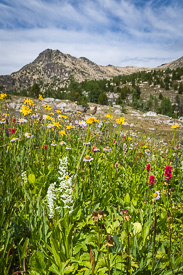
In this travelog program Mark takes you on a journey through a portion of the Pasayten Wilderness.Located just east of Ross Lake and nestled against the Canadian border, the Pasayten encompasses over 500,000 acres of land. With a four-night base camp on the shore of Upper Cathedral Lake at 7400′, Mark and his husband, Brian, meandered across lithosol meadows, tiptoed through wetlands, scrambled up Cathedral Peak’s summit ridge, and explored the three highest points on windswept Amphitheater Mountain with a peak elevation of 8358′. Wildflowers, grasses, and trees all caught Mark’s eye. He’ll share some favorites from the trip in this presentation, including a few plants that were new to him.
Goat Rocks Wilderness Wildflowers
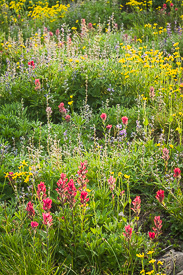
The Goat Rocks Wilderness is a popular backpacking destination between Mt. Rainier and Mt. Adams in southwest Washington. It’s one of the most spectacular portions of the Pacific Crest Trail. Mark will take you on a flower-filled journey through the heart of the Goat Rocks, including Cispus Basin, Snowgrass Flats, Old Snowy Mountain, and Goat Lake. Mid-summer wildflowers were at their mid-August peak when Mark and his husband, Brian, spent a week on the trail.
Gardening with Native Plants Programs
Incorporating Native Plants in Your Garden
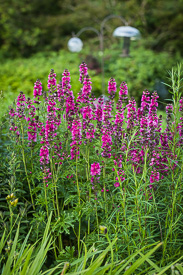
Do you have to go whole hog and ditch your old garden favorites when you “go native?” Not necessarily. Tuck native perennials and shrubs into your existing garden and begin experiencing the benefits of gardening with native plants without wiping the slate clean first. Learn how to choose appropriate native (and near-native) plants for your environment. See examples of native plants incorporated into an existing garden and new garden areas planted mostly with natives.
Native Plants for Beauty and Structure in Your Garden
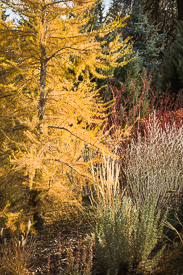
Native plants are attractive, well-adapted to our climate, beneficial to wildlife we want to have around, relatively low-maintenance, and need little supplemental water. Many are also beautiful and provide structure to your garden. In this program, Mark shows examples of great native plants for your garden and discusses how to choose plants that are likely to work for you.
Native Plants for Biodiversity
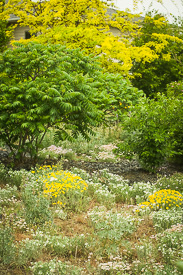
Washington has over 5,000 taxa of native plants, ranging from very common and widespread species to rare plants and narrow endemics. This plant diversity supports most of our wildlife, beginning with the insects that feed on them, and makes our state the beautiful and interesting place where we’ve chosen to live. While most of the rare and sensitive species aren’t appropriate for the home garden, a great number of natives are good choices for the garden, but some may be hard to get. In this program you’ll be introduced to (or reacquainted with) a selection of garden-worthy natives for both sides of the Cascades that are available from specialty nurseries and other sources. The plants will include trees, shrubs, perennials, and groundcovers.
Rock Gardens of the Pacific Northwest
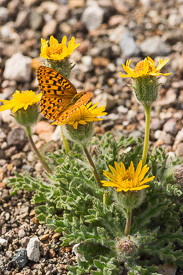
Some rock gardeners strive to recreate portions of alpine plant environments in miniature. Others are dedicated plant collectors, growing rare and unusual beauties in their backyards. In either case, it takes special dedication and knowledge about the plants and their habitats to be successful. It helps to have an environment that is relatively friendly to bringing plants to new homes and many places in the Pacific Northwest are suitable — with a little work.
In this illustrated program, Mark will share some of the Northwest rock gardens he has visited. He'll also contrast these garden environments and plants with some of the natural rock gardens found in the region — alpine environments, lithosols from the Columbia Plateau, and basalt cliffs in the Columbia Gorge.
37 Native Gems for Northwest Gardens
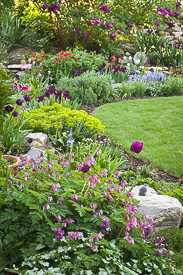
More than 5,000 species of plants are native to the Pacific Northwest, from delicate annuals to towering conifers. Learn about a few showy and garden-worthy selections for both spotlight and problem areas of your garden. Got wet shade? There’s a plant for that. Dry shade? Got it covered. Sun-baked west-facing slope? Yep, there are natives that thrive there, too. Front entry that must look good year-around? Natives fit that niche, too. Prickly barrier? Check. Attract birds and butterflies? Of course. Stunning photography will show you how these natives might fit into your personal landscape.
In From the Wild: Native Trees & Shrubs for Northwest Gardens
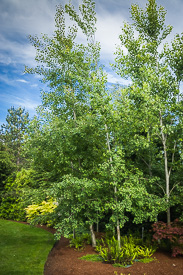
Trees and shrubs are the backbone of any garden. They provide structure, shade, food and shelter for wildlife, and year-around interest. Very often, gardeners think first of exotic trees, overlooking most of our natives. Learn to go beyond Oregon-grape, kinnikinnick, and red-osier dogwood in your garden. There are good choices for wet sites, for sun or shade, for cool west-side gardens and for parched eastern Washington sites. Learn the strengths (and weaknesses) of both evergreen and deciduous species. You don’t have to go 100% native, but including locally adapted trees and shrubs can save you money on your water bill while making your yard more attractive to wildlife.
Weeds Programs
The Beauty of Weeds
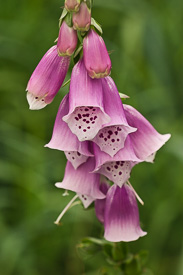
Maybe they just showed up in your garden, or you notice them as you walk your neighborhood or drive down the road. They’re the plants we call weeds, the ones we didn’t ask to join our gardens. But just because they’re weeds doesn’t mean they’re ugly. In fact, some of our weeds are quite beautiful. Come on a journey showcasing some of our most unwelcome plants and get a few tips on controlling them, too.
Photography Programs
An Eye for i: Phone Photos with Power
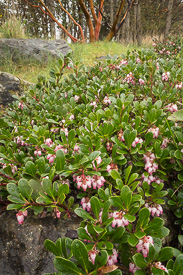
The iPhone is the camera many people have with them all the time. Learn how to get the most out of your phone’s camera at the time you click the shutter and then how to enhance your photos using the Snapseed app.
Take Control of Your Camera
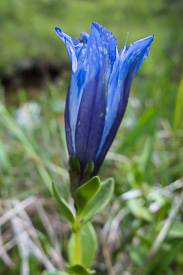
Your DSLR or compact digital camera has myriad settings you may be afraid to use because you don’t understand them. Do you feel confident using your camera in P, Av, Tv, and M modes – or are you stuck in a ‘safe’ rut? Learn to take control by understanding how aperture, shutter speed, and ISO affect exposure. Take advantage of aperture-priority auto for creative choices. Discover when and why you’d use a polarizing or neutral density filter. This is a nuts and bolts technical session that will help you become confident adjusting settings to get the creative effects you want.
Good Pictures in Bad Conditions
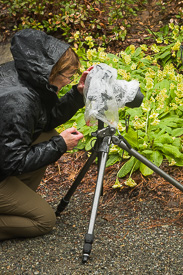
Soft light, neatly manicured garden beds, a sense of mystery and discovery are all things we wish for when we photograph gardens. But all too often the sun’s too bright, it’s raining, the daffodils need deadheading, or there are weeds lurking about when we arrive — with a deadline breathing down our necks. Mark will entertain and enlighten you with stories of his experiences making some of those proverbial “silk purses” when conditions are less than perfect. He’ll show the results and share some favorite tools for working in almost any conditions.
Macro Photography
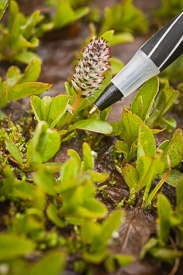
Get up close and personal with your favorite flowers in this introduction to macro photography. You’ll learn what is macro photography, how to work with light, composition techniques, how to control focus and depth of field, what makes a good macro specimen, the tools of the trade, and a bit about the ethics of nature photography.
Wildflower Field Photography: Combining Art & Science
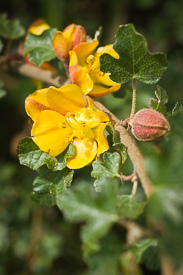
The Pacific Northwest is home to thousands of species of plants in a broad palette of colors, shapes, sizes, and textures. Join photographer Mark Turner for a weekend learning and practicing techniques for photographing wildflowers in their natural environment. Our field sessions will be in locations with a wide range of subject matter for artful details, plant portraits full of both beauty and information, and visual explorations of the interrelationships of several species in their habitats. The emphasis will be on discovering new ways to see the flowers, techniques for creative composition, separating subjects from distracting backgrounds, and controlling natural light.
Other topics will include ethical field practices and understanding technical descriptions to help create scientifically relevant images. Slide shows will introduce techniques, and then we'll then go into the field to put them into practice. In the evening a group critique of the day's work will provide rapid feedback. Participants should be familiar with operating their camera and bring an assortment of lenses from wide angle to macro to telephoto. A tripod is essential. Pariticipants can use any camera, including cellphone cameras, but digital SLRs or mirrorless cameras are preferred because of their significantly greater capabilities.
This program is also available as the introductory slide show and lecture only or as a one-day field workshop only. The field workshop is limited to 12 participants to insure hands-on personal attention for each student. Some groups have scheduled the intro slide show for the general public, followed by the field session for a smaller number of participants.
Photographing Your Garden Through New Eyes
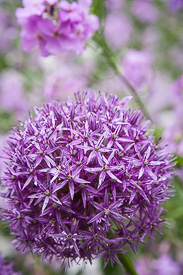
Gardeners use a palette of plants and hardscape elements to create works of art for their enjoyment or to share with friends, neighbors, or the public. In the process we develop a mental picture of what our gardens look like and sometimes miss other ways of seeing.
In this program Mark shares his insights into garden photography, inspiring gardeners and garden lovers alike to see their gardens in new ways as they learn basic photographic techniques. Using examples from his extensive garden photo library, he will show the effects of different qualities of light, composition tools, perspective, point of view, juxtaposition, and seasonal change.
This program can be followed by a field workshop for up to 12 participants in a garden setting with an optional evening critique.
Logistics
Equipment: All programs are presented using digital projection. Mark carries his own laptop and projector to assure smooth presentations free of technical glitches. Host groups need to provide a large projection screen (at least 60 x 60 inches), a table for the projector and computer, and AC power (two outlets). Please inquire if your venue requires a different setup, i.e. a meeting room where all AV is provided and shared among presenters.
Fees: Mark Turner’s speaking engagements are priced at $500 plus expenses for larger groups, and $300 for virtual talks or smaller groups such as local garden clubs. Expenses include travel to and from the venue if outside the Bellingham area, meals, and lodging if an overnight is needed. Effective October 1, 2025 these fees are subject to Washington state sales tax.
Scheduling: Please book your program as far in advance as possible, but Mark is sometimes available on short notice. It doesn't hurt to ask.